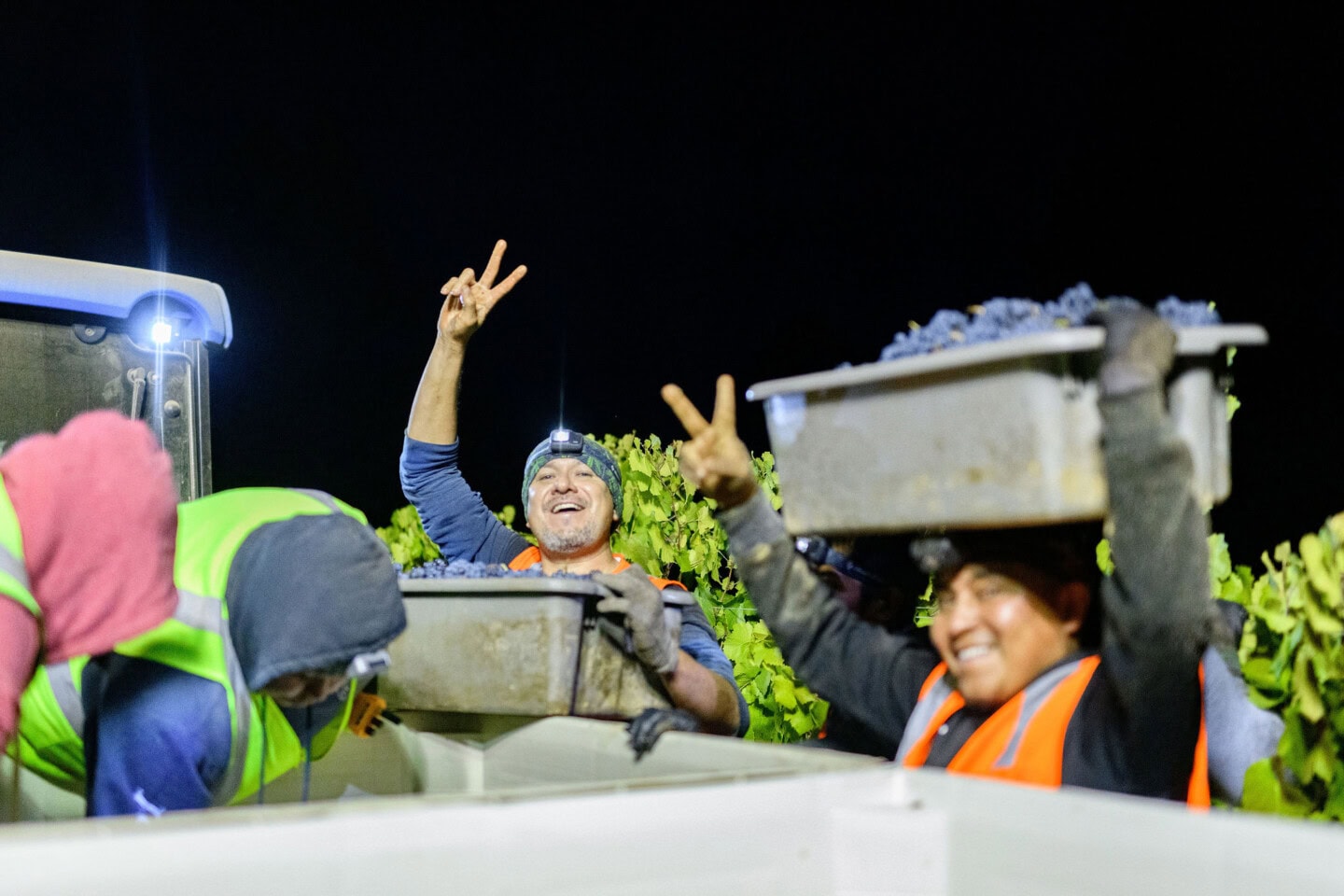
August 25th marked the beginning of our 2025 harvest, with Hyde Vineyard Chardonnay grapes destined for our sparkling program brought in. Always notable for their crisp acidity and delicate flavors, the blocks we source from make exceptional sparkling wine possible.
Just one day later, on August 26th, our first grapes destined for a still wine came in from Kent Ritchie Vineyard, this year as in most years, the first site to nose over the line. This special vineyard continues to produce Chardonnay with remarkable character and complexity due to its unique terroir and Kent’s personal stewardship.
Both picks arrived just a few days later than last year’s harvest—about 3-4 days behind our 2024 timeline. What’s particularly exciting is that yields are trending 10-20% lighter than last year, which often translates to more concentrated flavors and higher quality fruit.
The Art And Science Of Harvest Timing
One of the most critical decisions we make each vintage is determining the perfect moment to pick. It’s a delicate balance of science, experience, and intuition.
Our process begins in the vineyard with representative sampling. Armed with a 2.5-gallon bucket, we walk the rows, selecting clusters that represent the entire block. It’s quite the workout—last Friday alone, our harvest intern Janine and I logged over 10,000 steps before 9 AM! (They tell us this is heart-healthy.)
Timing is everything when it comes to sampling. We start early in the morning when the grapes are cool, ensuring the most accurate readings possible. As the day heats up, grapes can become dehydrated, causing sugar levels (measured in Brix) to appear artificially high.
Back at the winery, we carefully destem the clusters and crush the berries to extract juice for testing. We analyze three key metrics: Brix (sugar content), total acidity (TA), and pH. These numbers, combined with our tasting notes and observations of the vineyard conditions, guide our harvest decisions.
Looking Ahead: Perfect Ripening Weather
As I write this on September 2nd, the weather forecast looks ideal for the coming weeks. After a warm Labor Day weekend, temperatures will settle back into the comfortable 80s for the foreseeable future. This is exactly the kind of weather we hope for during harvest—warm enough to continue ripening, but not so hot that it stresses the vines or causes the fruit to overripen too quickly. Good times ahead!
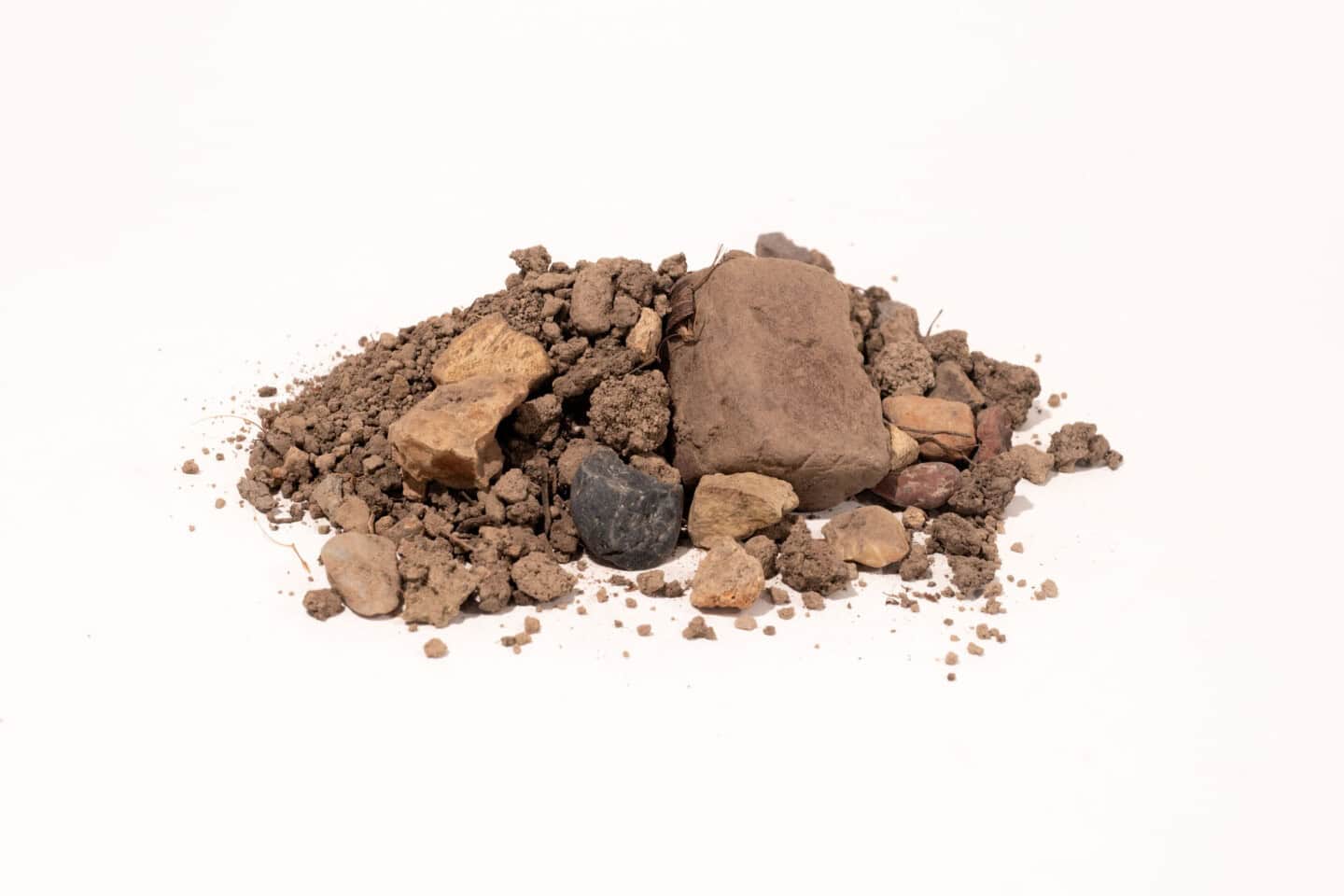
Above: eclectic, volcanic soils from Kent Ritchie Vineyard. Image by Jimmy Hayes.
Terroir Spotlight: The Volcanic Foundation Of Kent Ritchie Vineyard
Speaking of Kent Ritchie Vineyard, visitors to our tasting room always ask why its Chardonnay so distinctive? The answer lies deep beneath the surface, in soils that tell a story millions of years in the making.
The Kent Ritchie Vineyard sits atop the Laniger soil series, a fascinating geological formation born from ancient volcanic activity. According to Kent himself, a visiting geologist once revealed that this very hillside was once an active volcanic vent.
Dig just three feet down, and you’ll discover a treasure trove of volcanic materials that continue to influence our wines today:
Rhyolite rock: rich in silica, formed when magma rapidly cooled after being expelled from the volcanic vent. This silica-rich foundation contributes to the wine’s mineral complexity and aging potential.
Lapilli: button-shaped droplets of molten lava that were ejected during eruptions and fell to earth while still partially molten—add another layer of geological intrigue to the soil profile.
Tuff: composed of compressed volcanic ash, provides the final piece of this ancient puzzle, creating a complex matrix that our Chardonnay vines have learned to navigate over decades.
What sets the Laniger soils apart from other volcanic soils in our region is their distinctive pale color, a result of their high silica content and relative lack of mafic minerals. While mafic minerals—rich in iron and magnesium—typically give volcanic soils their characteristic red or brown hues, the Laniger series’ unique mineral composition creates soils that are notably lighter in color.
This geological heritage directly influences the character of our Kent Ritchie Chardonnay, contributing to its distinctive mineral backbone and elegant structure our winemaking team always endeavors to preserve and heighten.